
























Sea fish
Mediterranean sand smelt
Atherina hepsetus
Get to know the species, pick your region, find your spot.
Other names: Gümüş

- Family
- Atherinidae
Choose your region
The information changes with the region you choose.
Where is Mediterranean sand smelt caught?
Explore the regions or go straight to the map.
Sea of Marmara fishing spots
94Aegean Sea fishing spots
58Mediterranean fishing spots
53- Adalı Dere Kocaeli · Gölcük
- Ağadere Kocaeli · Körfez
- Agil Deresi Yalova · Çiftlikköy
- Alibey Deresi İstanbul · Eyüpsultan
- Alişan Deresi Balıkesir · Erdek
- Alpagut Deresi Çanakkale · Lapseki
- Arap Deresi Balıkesir · Erdek
- Ayamama Deresi İstanbul · Bakırköy
- Aghyl Dere Çanakkale · Eceabat
- Ahırkuyu Deresi İzmir · Karşıyaka
- Azmak Çayı Muğla · Ula
- Azmak Dere Çanakkale · Eceabat
- Bakırçay İzmir · Bergama
- Bornova Çayı İzmir · Bayraklı
- Bully Beef Gully Çanakkale · Eceabat
- Büyük Çiğli Deresi İzmir · Karşıyaka
- Akçay Antalya · Finike
- Aksu Çayı Antalya · Aksu
- Alakır Çayı Antalya · Kumluca
- Alara Çayı Antalya · Manavgat
- Anamur Çayı Mersin · Anamur
- Asi Nehri Hatay · Samandağ
- Ayvalık Deresi Adana · Yumurtalık
- Berdan Çayı Mersin · Tarsus
No fishing ground or region matches your search.
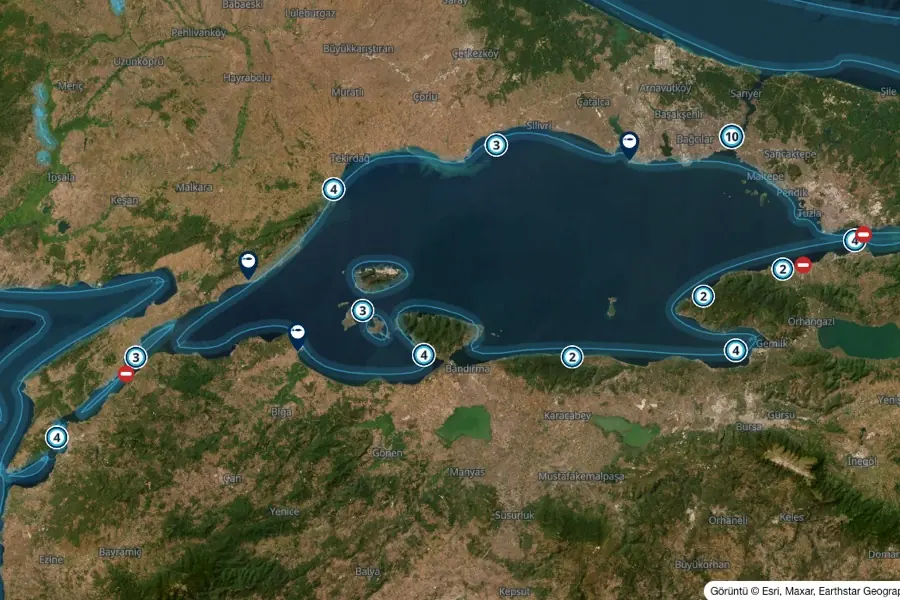
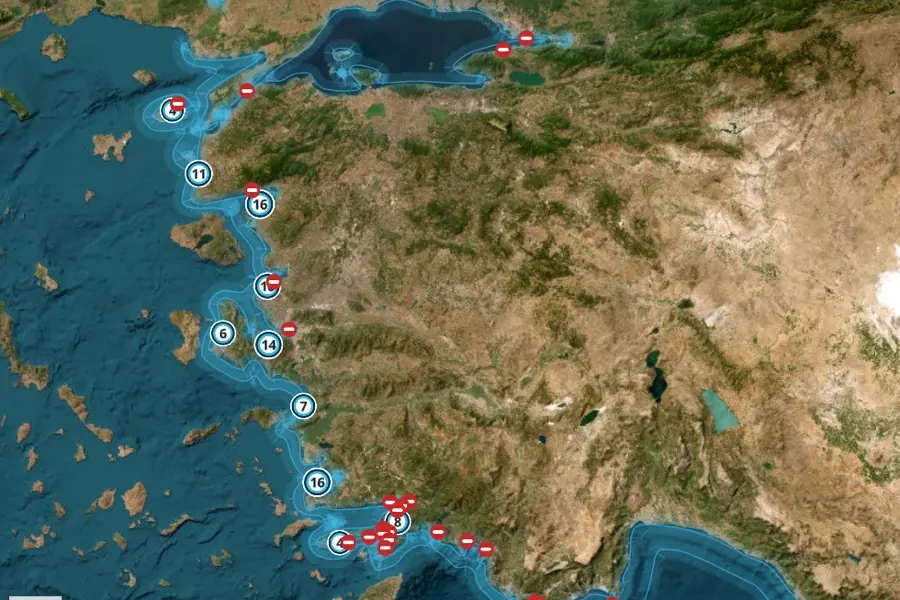
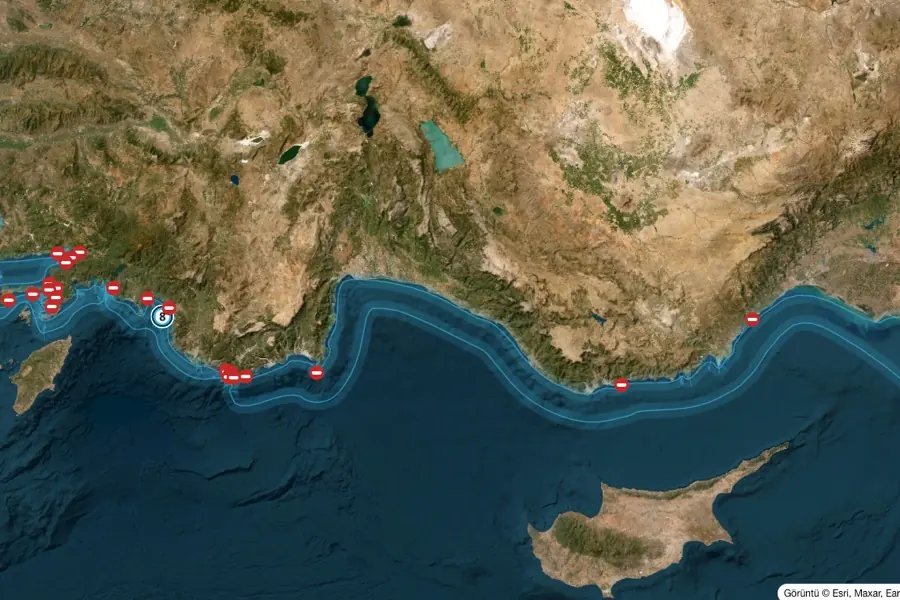
A listed spot is not a guarantee of a catch.
Sea of Marmara
Season and suitable conditions
Recorded all year round in this region; no distinct fishing season shows.
Aegean Sea
Season and suitable conditions
Recorded all year round in this region; no distinct fishing season shows.
Mediterranean
Season and suitable conditions
Recorded all year round in this region; no distinct fishing season shows.
Season information is no guarantee of a catch.
Best spots in November
By month
Average monthly score of the spots in Turkey (0–100).
- 25 Jan
- 23 Feb
- 26 Mar
- 32 Apr
- 64 May
- 66 Jun
- 51 Jul
- 38 Aug
- 55 Sep
- 69 Oct
- 49 Nov
- 28 Dec
The best spot in each Turkish province, by this month’s score.
- Güzelçamlı Sahili Kuşadası, Aydın 64/100 Good
- Tahtalı Çayı Menderes, İzmir 64/100 Good
- Havran Çayı Burhaniye, Balıkesir 60/100 Good
- Kadırga Koyu Sahili Ayvacık, Çanakkale 60/100 Good
- Kavala Deresi Enez, Edirne 60/100 Good
A 0–100 score from season, water temperature, habitat and local records; a general trend, not a guarantee.
Best times of day
When in the day it bites best, month by month.
- Active by day
- Limited at night
In November
-
Dawn Best 80
0.5 h before sunrise → 2 h after
-
Midday 70
1.5 h before midday → 1.5 h after
-
Dusk 80
1.5 h before sunset → 0.5 h after
-
Night 40
1 h after sunset → 2 h before sunrise
Moon phase
Effect of the moon on night fishing; the scores compare the phases.
- New moon 70
- First quarter 60
- Full moon 45
- Last quarter 60


Best phase: New moon
Windows across 12 months
| Best times of day | JJan | FFeb | MMar | AApr | MMay | JJun | JJul | AAug | SSep | OOct | NNov | DDec |
|---|---|---|---|---|---|---|---|---|---|---|---|---|
| Dawn | 65 | 65 | 80 | 80 | 80 | 85 | 85 | 85 | 80 | 80 | 80 | 65 |
| Midday | 80 | 80 | 70 | 70 | 70 | 55 | 55 | 55 | 70 | 70 | 70 | 80 |
| Dusk | 65 | 65 | 75 | 75 | 75 | 85 | 85 | 85 | 80 | 80 | 80 | 65 |
| Night | 30 | 30 | 35 | 35 | 35 | 45 | 45 | 45 | 40 | 40 | 40 | 30 |
Windows follow sunrise and sunset; clock times change with place and date. Scores are relative within the month: 100 is the best window of the day.
4 sources · confidence low
Habitat
Where it lives and in what kind of water: ranges compiled by the research.
Depth
0–30 m
mostly 0–10 m
Water temperature
15.2–23 °C
ideal 16.8–20.9 °C
Salinity
Also enters brackish water
0–40.5 ‰
Shore types
- Cove / inner bay
- Breakwater / jetty
- Pier / quay
- Around marinas
- Promenade / seafront
- River / stream mouth
- Lagoon / weir mouth
- Inside harbours
- Harbour mouth
- Reclaimed shore
Bottom
Lives in open water
Ranges from FishBase, AquaMaps and the literature; a general tendency, not a hard limit.
Confidence: shore type high, temperature medium
Bait and tackle suggestions
Recorded baits and fishing techniques.
Bait by month
Baits documented for shore fishing, month by month and by water clarity.
In November
Natural baits
Processed bait (all year)
- Chicken
By water clarity
Small shoaling fish / planktivore — Small-mouthed, picks its food by sight. Small, shiny lures such as sabiki rigs take the lead in clear water.
- Clear Visibility: over 8 m
- Lure First natural bait: Shrimp · Suitable Usually in this water: Very small fresh pieces (shrimp, worm, fish flesh); thin leader, small hook. First lure: LRF micro soft plastic · Very suitable Usually in this water: Sabiki rig, small feathers, micro jig; twitch slowly. Colour: White, Silver, Blue-green back
- Slightly coloured Visibility: 4–8 m
- Lure First natural bait: Shrimp · Suitable Usually in this water: Small fresh pieces; the sabiki hooks can be baited. First lure: Sabiki rig · Very suitable Usually in this water: Sabiki rig, micro jig, small spoon. Colour: Pink, Blue-green back, White, Silver
- Moderately coloured Visibility: 2–4 m
- Lure first, natural also works First natural bait: Shrimp · Very suitable Usually in this water: Worm or shrimp pieces on the sabiki (baited sabiki); chum. First lure: Sabiki rig · Very suitable Usually in this water: Baited sabiki, scented micro soft plastic. Colour: Fluorescent, Glow (UV), Pink, White
- Murky Visibility: 1–2 m
- Natural bait First natural bait: Shrimp · Suitable Usually in this water: Scented small pieces with chum; at night under lights. First lure: Hard minnow · Weak Usually in this water: UV/glow sabiki, lighted float. Colour: Glow (UV), Blue-green back, White
- Very murky Visibility: under 1 m
- Natural bait First natural bait: Shrimp · Suitable Usually in this water: Hard going; chum and scented small pieces. First lure: LRF micro soft plastic · Not recommended Colour: Colour does not matter
12-month bait calendar
- January
- Natural baits: Shrimp Lures: LRF micro soft plastic, Sabiki rig, Hard minnow
- February
- Natural baits: Shrimp Lures: LRF micro soft plastic, Sabiki rig, Hard minnow
- March
- Natural baits: Shrimp Lures: LRF micro soft plastic, Sabiki rig, Hard minnow
- April
- Natural baits: Shrimp Lures: LRF micro soft plastic, Sabiki rig, Hard minnow
- May
- Natural baits: Shrimp Lures: LRF micro soft plastic, Sabiki rig, Hard minnow
- June
- Natural baits: Shrimp Lures: LRF micro soft plastic, Sabiki rig, Hard minnow
- July
- Natural baits: Shrimp Lures: LRF micro soft plastic, Sabiki rig, Hard minnow
- August
- Natural baits: Shrimp Lures: LRF micro soft plastic, Sabiki rig, Hard minnow
- September
- Natural baits: Shrimp Lures: LRF micro soft plastic, Sabiki rig, Hard minnow
- October
- Natural baits: Shrimp Lures: LRF micro soft plastic, Sabiki rig, Hard minnow
- November
- Natural baits: Shrimp Lures: LRF micro soft plastic, Sabiki rig, Hard minnow
- December
- Natural baits: Shrimp Lures: LRF micro soft plastic, Sabiki rig, Hard minnow
This is the usual pattern; the water and weather on the day can change it. Colour is fine-tuning: bait type, size and action come first. Confidence: natural medium, lures low. Colour and presentation guide
In this region · Sea of Marmara
- Technique:
- Bottom Fishing
In this region · Aegean Sea
- Technique:
- Bottom Fishing
In this region · Mediterranean
- Technique:
- Bottom Fishing
Fishing rules
The regulation holds no separate minimum size or closed season entry for this species. The provisions for Türkiye as a whole apply.
Before you go, check local area and method restrictions.
Species profile

- Scientific name
- Atherina hepsetus
- Family
- Atherinidae
- Order
- Atheriniformes
- Water type
- Saltwater
- Seas
- Sea of Marmara, Aegean Sea, Mediterranean
- Other names
- Çizgili gümüş, Gümüş
Frequently asked questions
Which seas is Mediterranean sand smelt found in?
In our records Mediterranean sand smelt appears in these seas: Sea of Marmara, Aegean Sea, Mediterranean.
In which months is Mediterranean sand smelt at its peak?
Peak periods by sea: Sea of Marmara all year; Aegean Sea all year; Mediterranean all year.
Similar species