

























5 min read
Bluefish season: which sea, and when does it start?
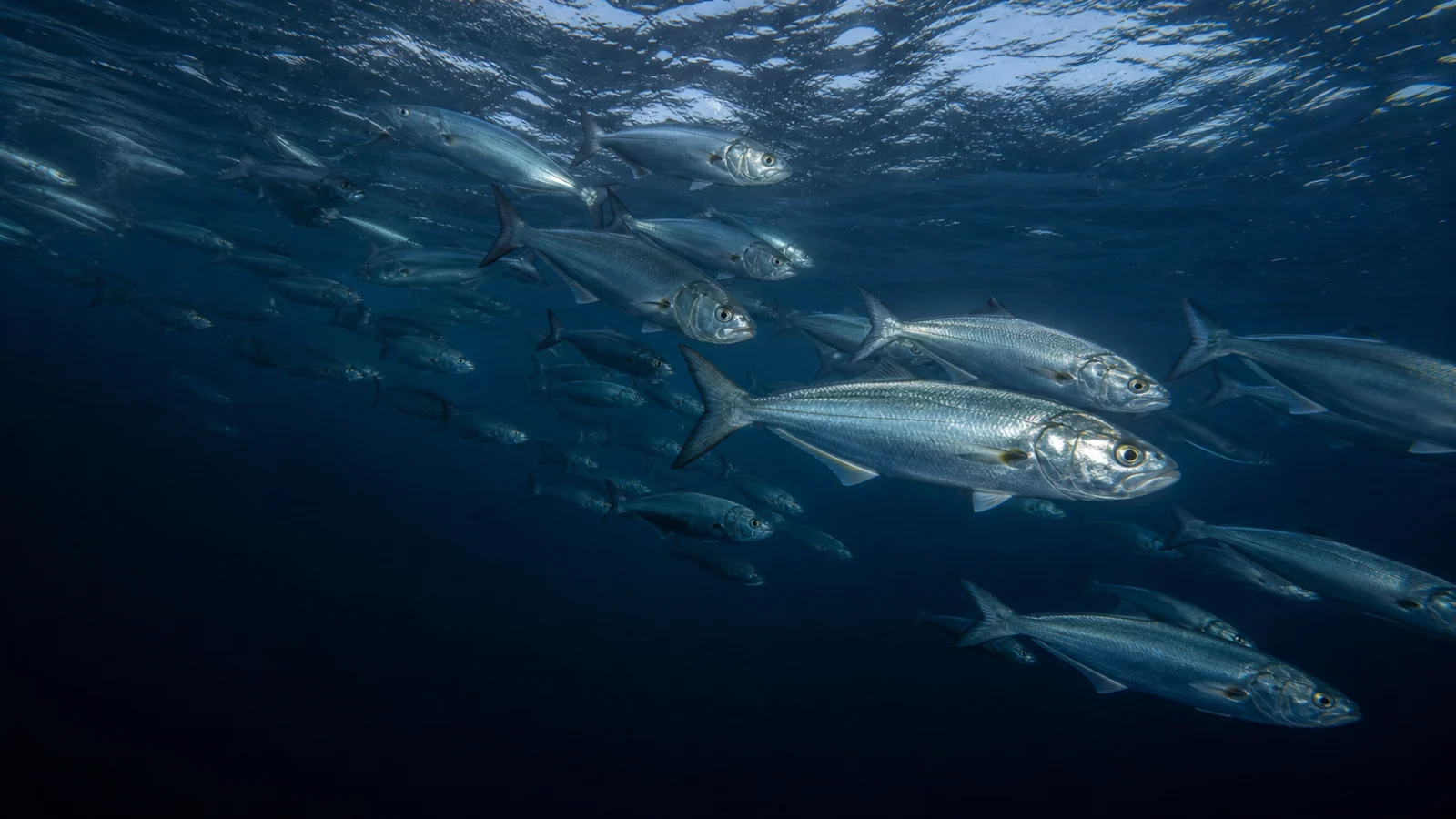
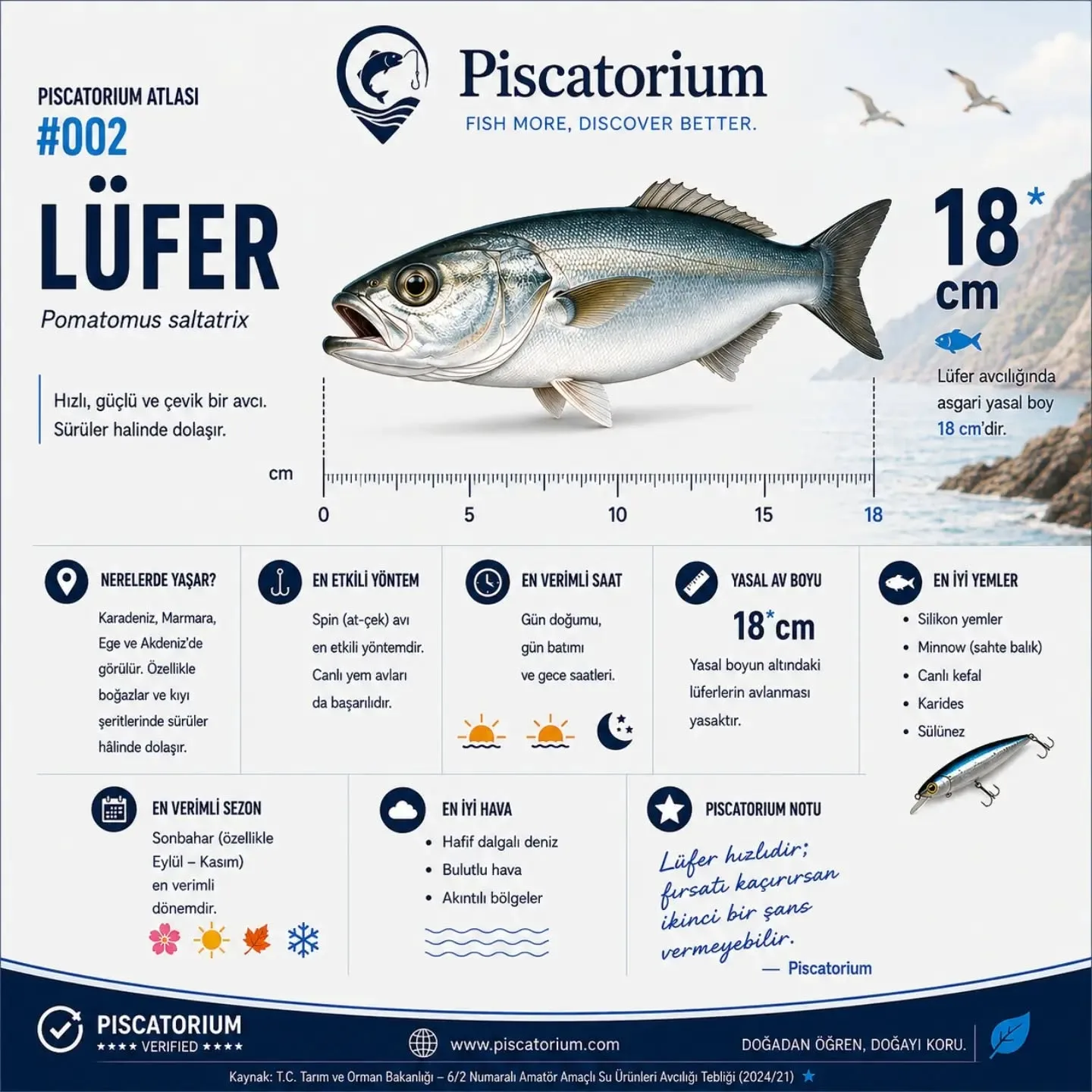
Bluefish (Pomatomus saltatrix) is recorded in our catalogue in all four seas — the Black Sea, the Marmara, the Aegean and the Mediterranean — in all twelve months of the year. So there is no opening date that changes from sea to sea; behind the phrase "the bluefish have started" is not a calendar but migrating schools moving close to the shore. In this article you will find the records for the four seas, the general pattern of the migration, the names for the different sizes and the rules.
Short answer: recorded year-round in four seas
A commonly heard ordering goes like this: the season opens first in the south and arrives later toward the north. Our records do not support this ordering. For a species marked as productive in every month in all four seas, giving a start month sea by sea is not backed by data. What changes is not the presence of bluefish but their size, the size of the school and how close to shore they come.
In our catalogue the shore-fishing suitability of bluefish is marked "high", and its habitat is marked as current-swept coast and open water. Because it is a pelagic hunter, it goes wherever the baitfish go: a fish that strikes every evening for a week at one breakwater can be a few kilometres away the following week.
Bluefish in four seas: recorded spots and supporting bait
| Sea | Spots where bluefish is recorded | Total spots in the sea | Regional supporting bait |
|---|---|---|---|
| Marmara | 294 | 398 | European anchovy, Atlantic horse mackerel, shrimp |
| Aegean | 295 | 377 | European sardine, mamun, sülünez |
| Black Sea | 222 | 392 | European anchovy, European sprat |
| Mediterranean | 221 | 295 | European sardine, European squid, shrimp |
The number of spots measures how widespread the species is, not how abundant: it tells you that bluefish is recorded at that spot, not that it is caught there every day. It is recorded at the great majority of spots in the Aegean, the Marmara and the Mediterranean; in the Black Sea it is recorded at 222 of 392 spots, a lower proportion than in the other three seas.
Migration: why do bluefish seem to "start"?
The bluefish season is described more by migration than by the calendar. The general pattern known among fishermen is this: schools that spend the summer feeding in the Black Sea turn south in autumn, descending through the Istanbul Strait into the Marmara and from there through the Çanakkale Strait into the Aegean. In spring the direction reverses and the schools head north again. In the weeks when they pass through, fishing suddenly comes alive in the straits and along the surrounding shores; what people call "the bluefish have started" is most often this.
For this reason two shores can have completely different experiences in the same month. While the school is in the Strait, fishing on the Black Sea coast can go quiet; once it spreads into the Marmara, the Strait settles down. In the Aegean and the Mediterranean the movement of the schools is more scattered, and how close they come to shore is mostly determined by the position of the baitfish. Timing also changes from year to year: when the water cools, which direction the wind blows from and where baitfish such as European anchovy and Atlantic horse mackerel gather all influence the school's route.
The pattern above is general fishing knowledge; it describes the order, not exact dates. The best indicator of where the school is that week is the activity on the shore: baitfish fleeing at the surface, the spot where birds gather and a sudden increase in the crowd on the pier.
Snapper bluefish, sarıkanat, kofana: the same fish, different sizes
As bluefish grow, they are called by different names. From smallest to largest the order is: defne yaprağı, snapper bluefish, sarıkanat, bluefish and kofana. In our catalogue snapper bluefish, sarıkanat and kofana are recorded as local names of bluefish; none of them is a separate species.
Season is also tied to the size names. At the end of summer mostly small sizes, snapper bluefish and sarıkanat, are seen along the shore; in autumn the bluefish size, and toward winter the large kofana, come to the fore. This too is a general tendency, not an exact calendar. The communiqué looks not at names but at centimetres: the limit is 18 cm, so defne yaprağı and the smaller snapper bluefish go back into the water.
Which provinces stand out?
The six provinces with the most spots where bluefish is recorded in our catalogue:
- İstanbul — 178 spots. The Strait, the Marmara coast and the Black Sea coast are in the same province; it sits right in the middle of the migration route.
- Antalya — 142 spots. The long rocky and sandy stretch of the Mediterranean coast.
- Muğla — 124 spots. The indented coast where the Aegean and the Mediterranean meet.
- Çanakkale — 93 spots. The strait passage between the Marmara and the Aegean.
- İzmir — 75 spots. The Aegean coast with its gulfs and peninsulas.
- Balıkesir — 56 spots. The Marmara and Aegean coasts together.
It is no surprise that İstanbul comes first: the Strait the migration passes through and the coasts of two seas lie in the same province. We explained how the current in the Strait shapes bluefish fishing in the Strait fishing article.
Bait and technique
In all four seas, Atlantic horse mackerel, garfish and European sardine are recorded as natural bait, and minnow, spoon and soft plastic as artificial lures. For technique, spinning, sırtı and baited rigs are used; in the records of all four seas the standout choice is the sinking minnow with spinning. The supporting baits in the table show the baits that are easy to find in that sea and that bluefish follow.
Bluefish have sharp teeth and cut thin line easily. That is why it is common to use a thick shock leader or a thin steel wire at the end of the rig. With artificial lures, a fast and erratic retrieve works because it imitates fleeing baitfish. The fish are often more active at dusk and at night, at headlands where the current tightens and at breakwater ends; baitfish gathering in the evening at lit piers draw them to the shore as well.
Rules: 18 cm and 5 kg a day
In recreational fishing the minimum legal size of bluefish is 18 cm and the daily limit is 5 kg per person. There is no closed season defined for the species; area and method bans apply separately. The basis is the 7th schedule of communiqué no. 6/2. The information here is a summary; the official communiqué is the binding one, and you should check the current publication before fishing. The limits for all species are on the legal fish sizes page.
Measurement is taken from the tip of the nose to the tip of the tail. If you are in doubt about a fish close to the limit, releasing it suits both the rule and next year's catch.
Frequently asked questions
Are bluefish caught in summer?
Yes; in our catalogue they are recorded in all four seas in the summer months too. But the schools that come to the shore in summer are dominated by small sizes. A significant share of the fish that come may be under 18 centimetres; in that case, using a bigger hook and lure reduces the chance of small fish getting hooked.
Do bluefish end in winter?
No. In our records the winter months also appear productive; in this period large kofana and shores close to deep water come to the fore. In cold water fish move more sluggishly, so retrieving the lure slower and from deeper works.
Before you go
To find bluefish, look at three things instead of the calendar: where the baitfish are, which shore the wind is pushing them to and the direction of the current. On the map you can filter by species to see the spots where bluefish is recorded, and tap a spot to see the last recorded wind and wave values. For identification, habitat and tackle, take a look at the bluefish species page, and for conditions and times, the bluefish fishing article.