Skip to content
Black-barred halfbeak

Sea fish

Black-barred halfbeak

Hemiramphus far

Get to know the species, pick your region, find your spot.

Other names
İbikli çomak balığı

(c) Jan Ebr & Ivana Ebrová, some rights reserved (CC BY) · source

Choose your region

The information changes with the region you choose.

Check local rules ↓

01 / Fishing grounds

Where is Black-barred halfbeak caught?

Explore the regions or go straight to the map.

02 / Season and conditions

Season and suitable conditions

Check the season information for the region you chose.

Aegean Sea

There is no season data for this species yet.

Missing data does not mean an unproductive period.

03 / Bait and tackle

Bait and tackle suggestions

Recorded baits and fishing techniques.

Complete your tackle The right gear improves your chances.
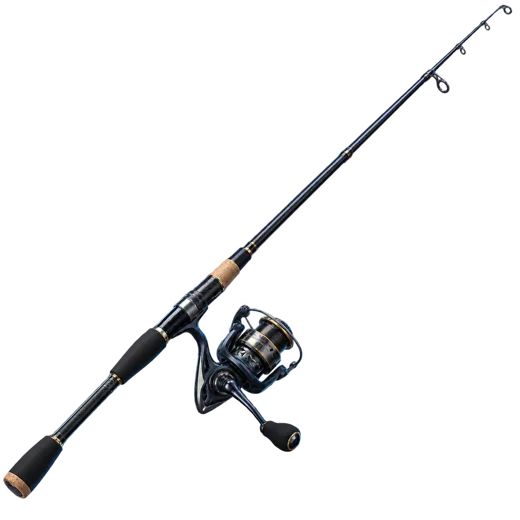
Rod
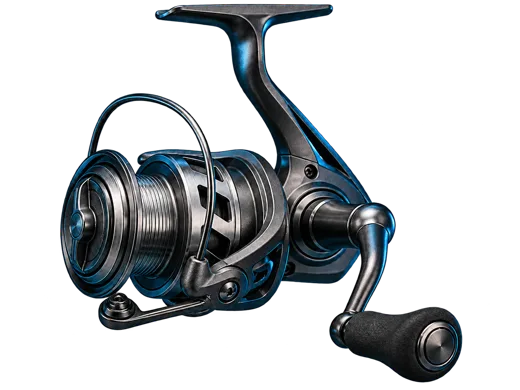
Reel
Line and leader
See tackle suggestions ↗
Tackle recipe 1

A setup to start from. Rod length, line diameter and drag are changed to suit the size of fish you are after and the current and bottom structure of the ground.

Bombarda/Bubble Float

Surface trolling

Casting a light bait or lure far with a clear/bubble float

  • Level: Beginner–Advanced
  • Effort: Low–Moderate
Rod
3.00–4.20 m; 10–50 g
Reel
2500–4000
Main line
0.20–0.28 mm mono or PE 0.8–1.2
Leader/trace
1–2 m; 0.18–0.28 mm
Hook/lure
#10–#4 or garfish rope lure
Bait/lure
Bread flake
Connector
Swivel/clip; pick a suitable breaking strain

Watch out: Long rigs snagging behind you

Keep with you: Pliers, hook remover, glasses and first aid

Regulations: Communiqué 2024/21 Article 16 hook and line limits and place bans are checked

04 / Rules

Fishing rules

The regulation holds no separate minimum size or closed season entry for this species. The provisions for Türkiye as a whole apply.

Species profile

Scientific name
Hemiramphus far
Family
Hemiramphidae
Order
Beloniformes
Water type
Saltwater
Seas
Aegean Sea, Mediterranean
Other names
Yarımgaga balığı, İbikli çomak balığı

How to identify the black-barred halfbeak

The easiest way to identify this species is to look at its jaws. FishBase describes a greatly prolonged, beak-like lower jaw and a short, triangular upper jaw without scales; the dorsal and anal fins sit far back on the body, and the lower lobe of the tail fin is longer than the upper. The CIESM Atlas of Exotic Fishes in the Mediterranean Sea adds that the tip of the lower jaw is red and the upper lobe of the tail fin is yellow. FishBase gives the colour as a bluish back and silvery flanks, with 3 to 9, usually 4–6, vertical bars on the sides. This is where you need to be careful: the CIESM Atlas notes that in the Mediterranean population these blackish marks, commonly used to tell the species from its close relatives, are often faded or missing altogether. The distinguishing feature the atlas points to is the upper jaw: halfbeaks of the genus Hyporhamphus have scales on it, while in H. far it is naked. The same source notes that the first Mediterranean record was made under the name Hemiramphus marginatus. The Turkish name of this species in FishBase’s record for Türkiye is ‘yarımgaga balığı’, while WoRMS gives ‘ibikli çomak balığı’. ‘Külah balığı’ belongs to a different fish: FishBase lists that name for Fistularia commersonii, the bluespotted cornetfish (/en/turler/kulah-baligi).

Where did it come from, and where does it live?

WoRMS places the species in the family Hemiramphidae of the order Beloniformes, and its home range is the Indo-West Pacific. FishBase gives its distribution as running from the Red Sea and East Africa to Samoa, north to the Ryukyu Islands and south to northern Australia and New Caledonia, and notes that it has entered the eastern Mediterranean through the Suez Canal. According to the same source it lives in coastal waters, in areas rich in vegetation and on sand flats, at depths of 0–6 metres; the CIESM Atlas likewise describes it as a fish of inshore surface waters. The CIESM Atlas dates the first Mediterranean record to 1927, on the coast of Palestine; records from Syria, from Rhodes in 1938 and later from Egypt and Tunisia followed, and the species has also reached the coast of Algeria and Lampedusa in Italy. According to the atlas it is very abundant in the eastern basin as far as the Strait of Sicily; in the Levant its large schools are caught mainly with purse seines and occasionally with trammel nets. For Türkiye, the list of alien species that Çinar and colleagues published in PLOS ONE in 2021 gives the first observation year as 1942 for the Mediterranean (Levantine) coast and 2009 for the Aegean, and classes the species as ‘established’. The Aegean record is described in a note by Akça and Bilecenoğlu published in Mediterranean Marine Science in 2010: on 10 November 2009 a purse seiner caught a specimen of 14.6 centimetres standard length off Aslanburnu, Eski Foça, and seven more fish came from the same spot in December. The authors regard this as the northernmost record in the Aegean and a sign of an established population.

How does it live, and what does it eat?

It is a schooling fish. The CIESM Atlas says it can leap out of the water and skitter across the surface with half of its body out of the water. On diet the sources diverge: FishBase says adults feed mainly on seagrasses and, to a lesser extent, on green algae and diatoms, while the CIESM Atlas gives its food as zooplankton and floating objects. On reproduction, CIESM writes that the eggs are large and attach to floating or bottom objects with adhesive filaments, while FishBase says the species breeds in estuaries. A study carried out in Egypt’s Bardawil lagoon and published in the Egyptian Journal of Aquatic Biology and Fisheries in 2019 found that spawning takes place between May and July and that the maximum lifespan is 4 years. FishBase records the species as one taken by commercial fisheries, targeted as a game fish and occasionally used as bait.

Frequently asked questions

Which seas is Black-barred halfbeak found in?

In our records Black-barred halfbeak appears in these seas: Aegean Sea, Mediterranean.

How big does the black-barred halfbeak get?

The sources do not give the same upper limit. FishBase lists a maximum length of 45 centimetres total length and a common length of 30 centimetres; the CIESM Atlas gives a common size of 10–30 centimetres and a maximum of 40. According to the Bardawil lagoon study, half of the fish reach sexual maturity at 23.1 centimetres, and the maximum lifespan is 4 years. The first specimen from the northern Aegean measured 14.6 centimetres standard length.

Is the black-barred halfbeak poisonous?

Under ‘threat to humans’, FishBase lists this species as ‘harmless’. According to the same source it has no spines in its dorsal and anal fins; the dorsal fin has 12–15 soft rays and the anal fin 10–12. The CIESM Atlas also notes that in the Levant it is caught mainly with purse seines and contributes to local fisheries.

Where is the black-barred halfbeak found in Türkiye?

According to the 2021 list by Çinar and colleagues, the species has been recorded on Türkiye’s Mediterranean (Levantine) coast since 1942 and in the Aegean since 2009, and is considered established; the list classes it as an open-water (pelagic) fish living at depths of 0–10 metres. WoRMS also counts Türkiye’s eastern Mediterranean waters among the areas where it occurs as an alien species. The 2010 note by Akça and Bilecenoğlu reports the northernmost Aegean record from off Eski Foça.

Black-barred halfbeak

Pick your spot, check the conditions, then head out.

Open fishing grounds on the map ↗
Open map ↗