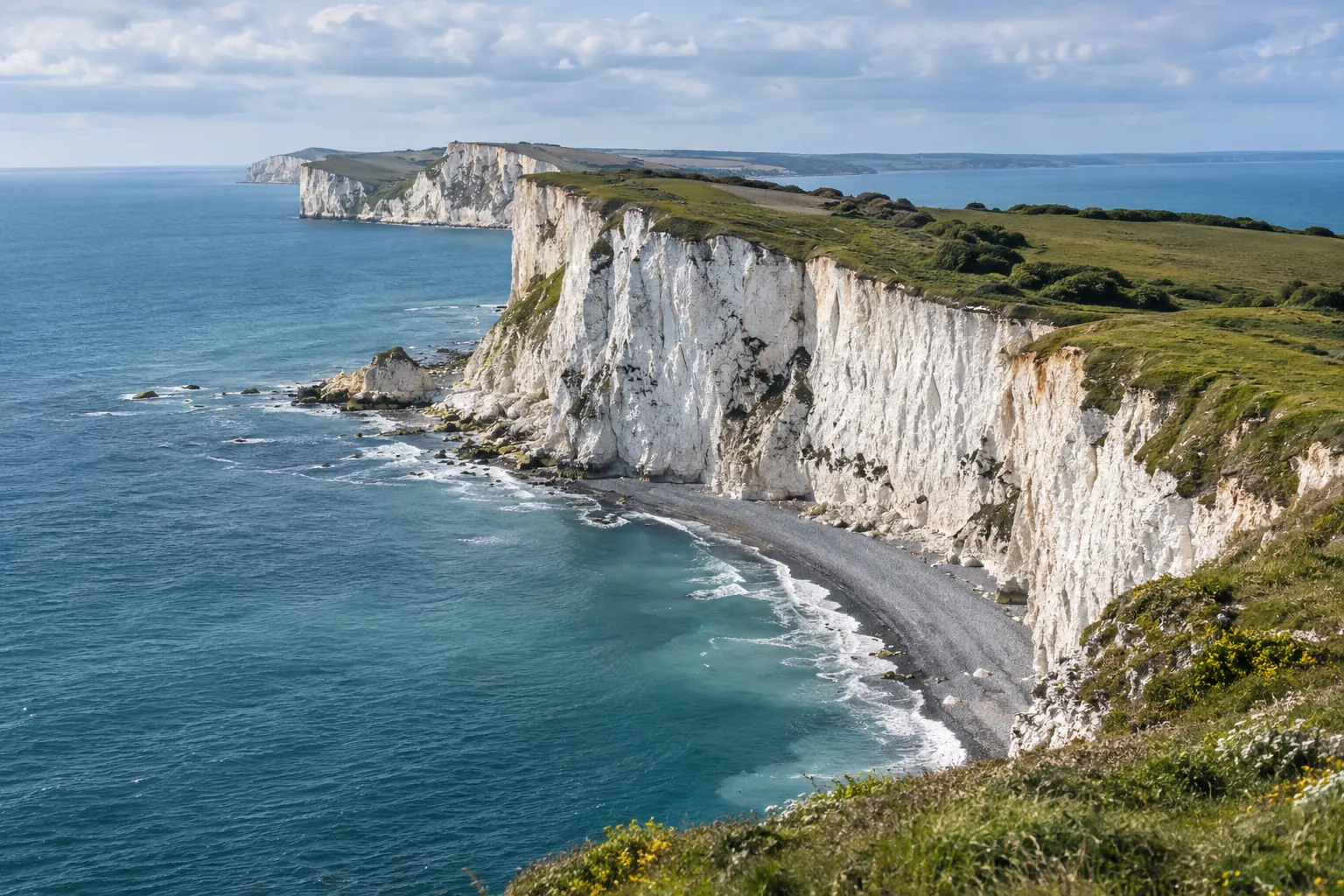
 Representative image
England
South East Coast of England Fishing Map
Find your stretch of coast. Explore fishing grounds, get to know the species and plan your next day by the water.
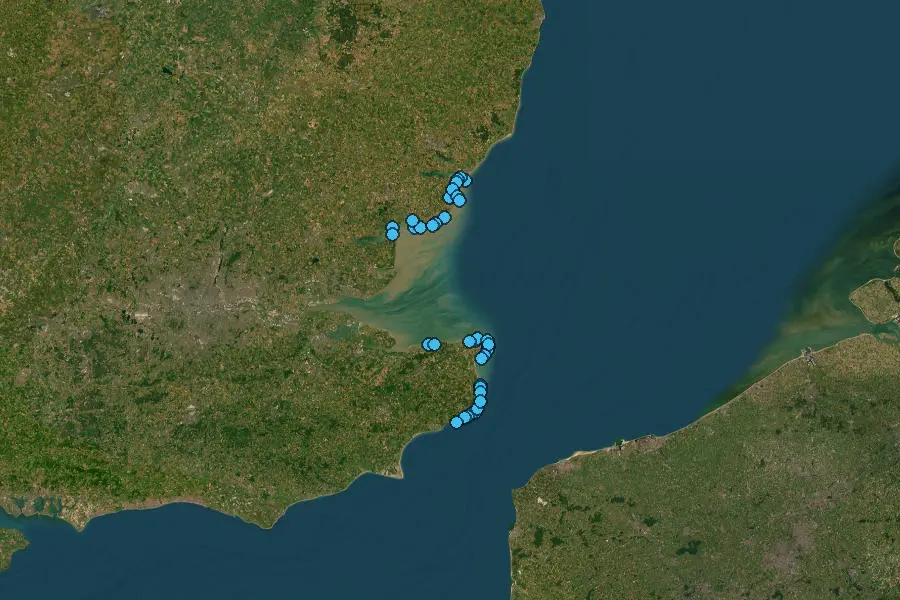 South East coastAll 37 grounds on the map
01 / Discover the coast
South East Coast of England fishing spots 37
Choose a place, explore its details or go straight to its pin on the map.
A total of 37 grounds; the first 37 of them are below.
Matching grounds:
Show 31 more grounds
No matching grounds. Try another place or explore all grounds on the map.
02 / Species
What can you catch on the South East coast of England?
Meet the species recorded in these waters. Open a species for its techniques, bait and fishing grounds.
Matching species:
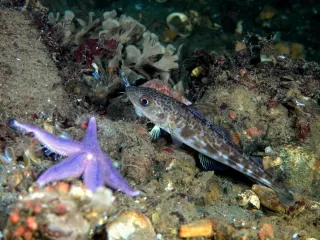
Atlantic cod
Gadus morhua

European squid
Loligo vulgaris
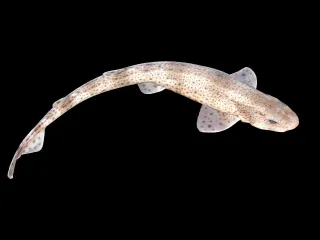
Small-spotted catshark
Scyliorhinus canicula

European seabass
Dicentrarchus labrax

Common cuttlefish
Sepia officinalis

Atlantic horse mackerel
Trachurus trachurus

Atlantic mackerel
Scomber scombrus

Garfish
Belone belone
European plaice
Pleuronectes platessa

Gilthead seabream
Sparus aurata

Common sole
Solea solea

Brill
Scophthalmus rhombus

Thicklip grey mullet
Chelon labrosus

Turbot
Scophthalmus maximus

Tub gurnard
Chelidonichthys lucerna
Common dab
Limanda limanda

Whiting
Merlangius merlangus

European flounder
Platichthys flesus

Greater weever
Trachinus draco
Ballan wrasse
Labrus bergylta

European conger
Conger conger
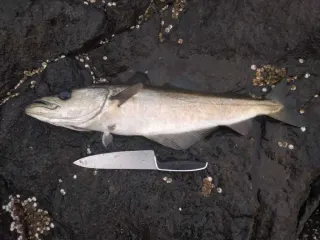
Pollack
Pollachius pollachius
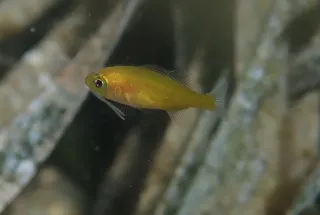
Black seabream
Spondyliosoma cantharus
No matching species. Try another name or see every species in the catalog.
In season · October
South East Coast of England fishing calendar
Species with a productive season this month. Seasonal data is a guide, not a guarantee of a catch.
Species counts peak on the South East coast of England in Jun, Jul, Aug — the strip shows how many species are productive in each month.
- 9 Jan
- 9 Feb
- 10 Mar
- 12 Apr
- 11 May
- 16 Jun
- 16 Jul
- 15 Aug
- 14 Sep
- 6 Oct
- 9 Nov
- 9 Dec
The height of the strip is the number of productive species in that month; it is not a guarantee of a catch. The turquoise column is the current month.
What is caught on the South East coast of England month by month
For each month, the species in season — the most seasonal ones first.
- Jan
- Atlantic cod, European squid, Whiting, Small-spotted catshark, Thicklip grey mullet, European flounder and 3 more species
- Feb
- Atlantic cod, European squid, Whiting, Small-spotted catshark, Thicklip grey mullet, European flounder and 3 more species
- Mar
- Turbot, Common sole, Brill, European plaice, Small-spotted catshark, Thicklip grey mullet and 4 more species
- Apr
- Turbot, Common sole, Brill, European plaice, Common cuttlefish, Pollack and 6 more species
- May
- European plaice, Common cuttlefish, European seabass, Black seabream, Pollack, Small-spotted catshark and 5 more species
- Jun
- Tub gurnard, Common cuttlefish, Atlantic mackerel, Garfish, Atlantic horse mackerel, Gilthead seabream and 10 more species
- Jul
- Tub gurnard, Common cuttlefish, Atlantic mackerel, Garfish, Atlantic horse mackerel, Gilthead seabream and 10 more species
- Aug
- Tub gurnard, Atlantic mackerel, Garfish, Atlantic horse mackerel, Gilthead seabream, Greater weever and 9 more species
- Sep
- Atlantic mackerel, Garfish, Atlantic horse mackerel, Gilthead seabream, Greater weever, European seabass and 8 more species
- Oct
- Small-spotted catshark, Thicklip grey mullet, European flounder, Common dab, Ballan wrasse, European conger
- Nov
- Atlantic cod, European squid, Whiting, Small-spotted catshark, Thicklip grey mullet, European flounder and 3 more species
- Dec
- Atlantic cod, European squid, Whiting, Small-spotted catshark, Thicklip grey mullet, European flounder and 3 more species
What bites on the South East coast of England this month
Ranked by this month’s research score at the spots of this sea. Bait: first choice in the sea’s typical water (Very murky).
Very good
- Gilthead seabream Sardine 92/100 at 9 spots
- European seabass Sardine 91/100 at 37 spots
- European flounder Horse mackerel 89/100 at 37 spots
- Common sole Sardine 88/100 at 37 spots
- Pouting Mackerel 88/100 at 37 spots
- European squid Horse mackerel 85/100 at 27 spots
- Ballan wrasse 82/100 at 10 spots
- Atlantic cod 81/100 at 37 spots
- Pollack 81/100 at 37 spots
- White seabream 80/100 at 7 spots
- Striped red mullet 80/100 at 33 spots
- Common cuttlefish 79/100 at 8 spots
+10 more species
Good
- Tub gurnard
- Black goby
- Grey triggerfish
- Black seabream
- Golden grey mullet
- Common octopus
- Bogue
- Atlantic bonito
- Saithe
- Giant goby
+12 more species
Weak
A 0–100 score from season, water temperature, habitat and local records; a general trend, not a guarantee.
Your coastal field guide
Techniques & bait
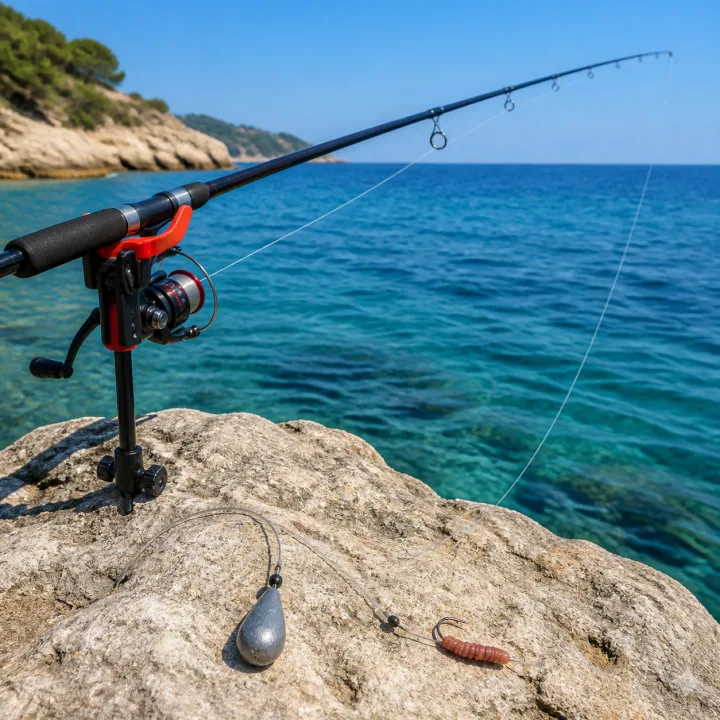 Bottom9 species
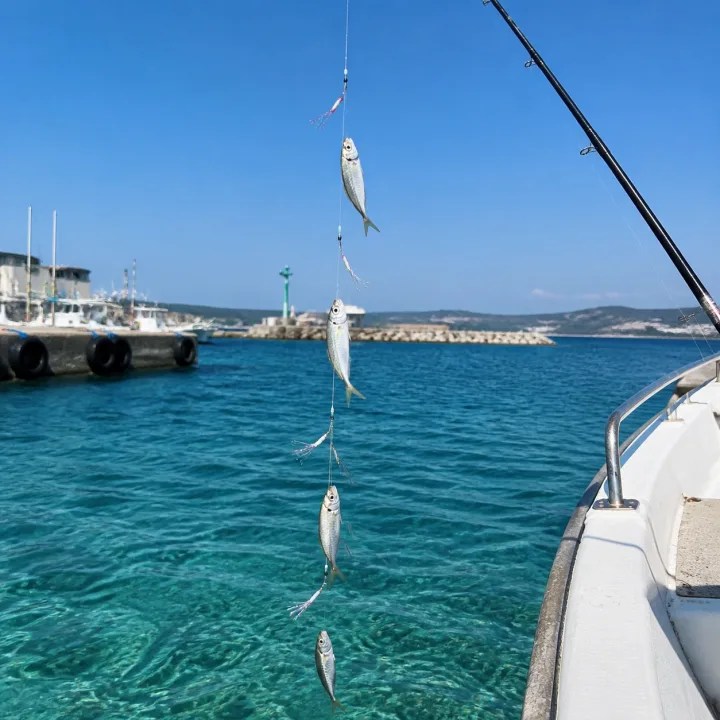 Sabiki3 species
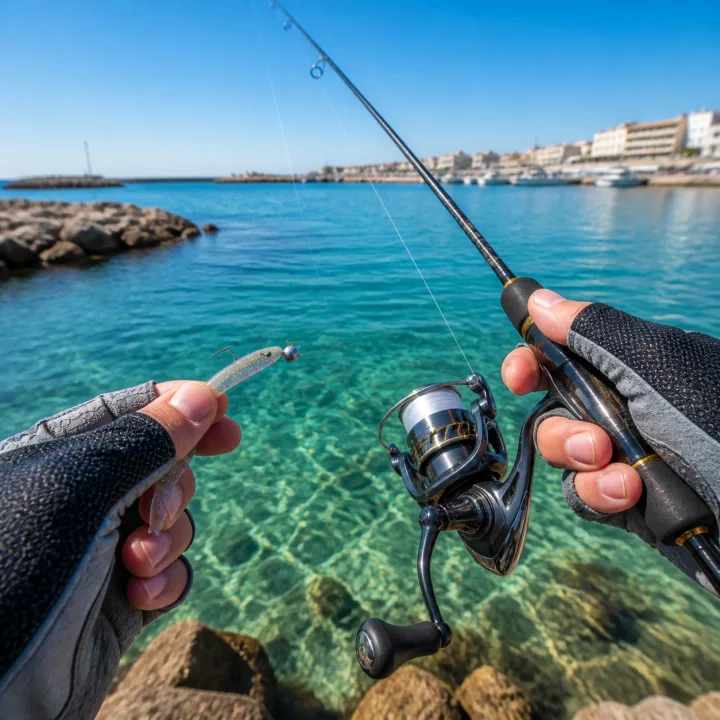 LRF3 species
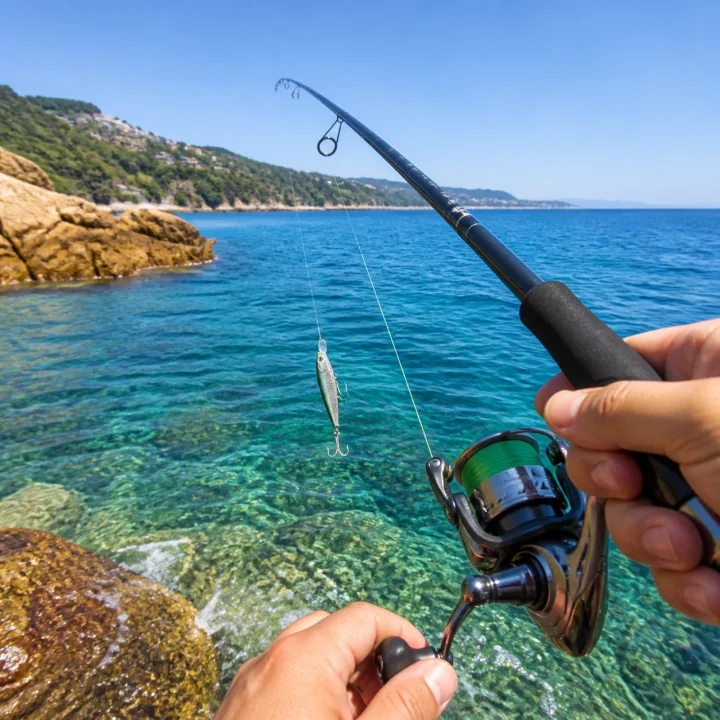 Spin3 species
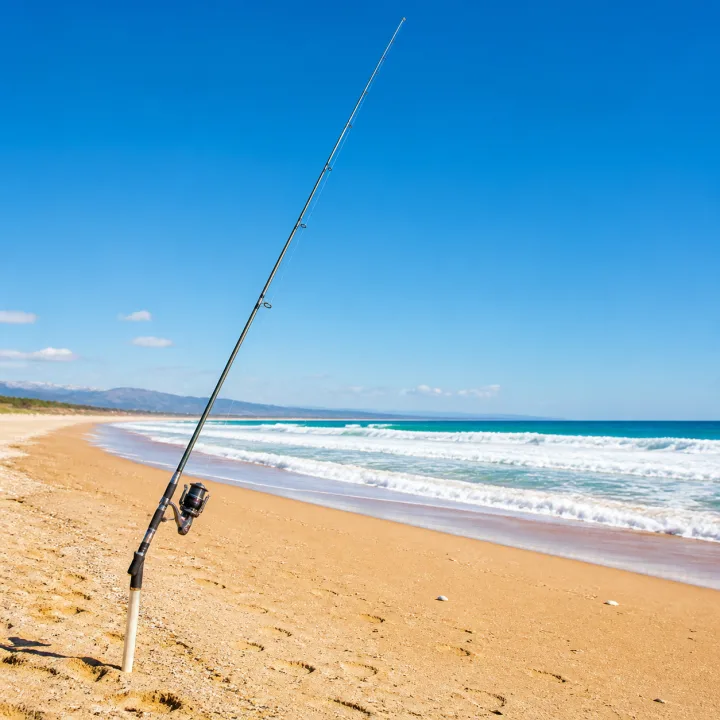 Surf3 species
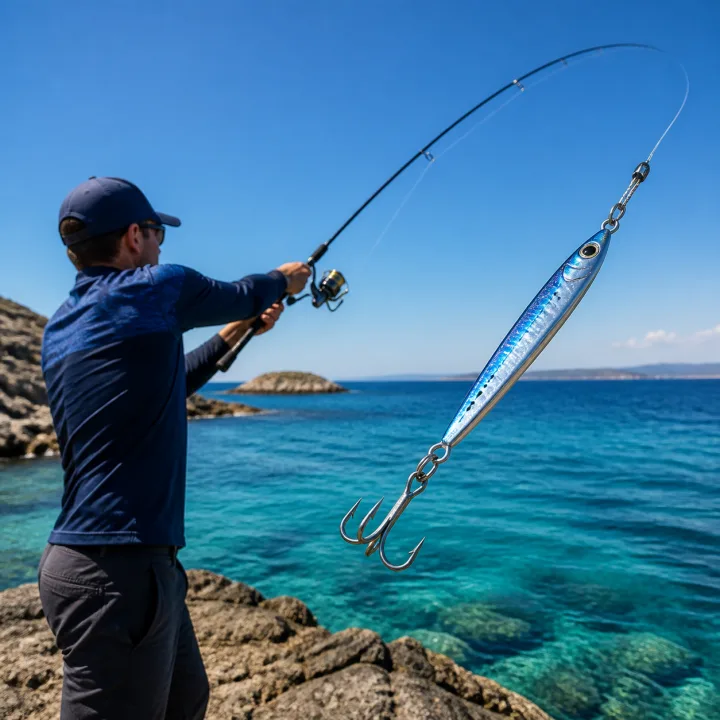 Jig1 species
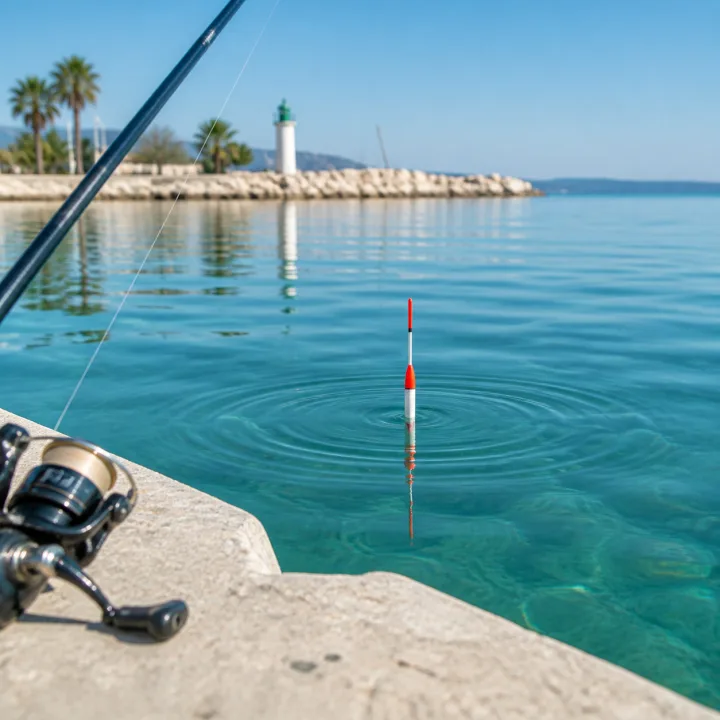 Float1 species
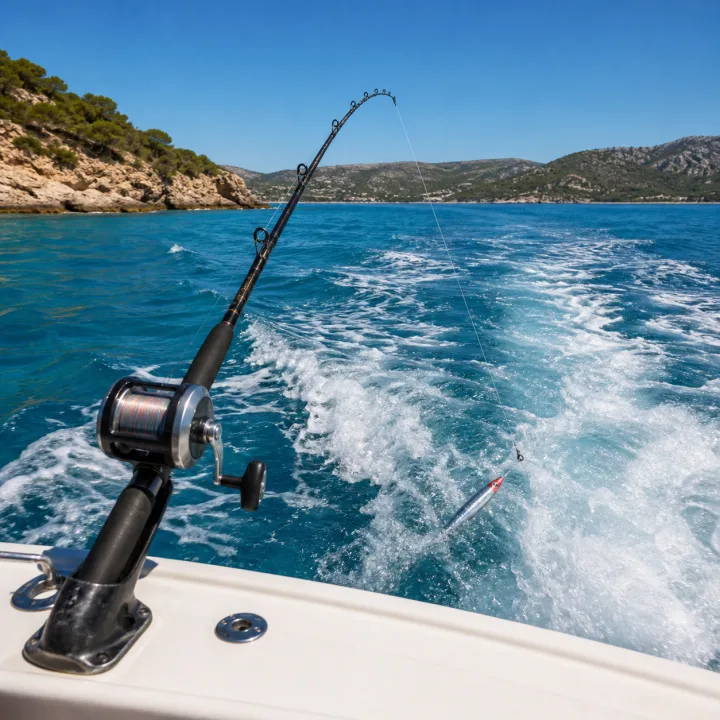 Trolling1 species
Shrimp 6Anchovy 5Sardine 4Fish flesh 3Squid 3Mamun 3Worm 2Mussel 2Octopus 1Live bait 1Horse mackerel 1Whiting 1Sülünez 1Chicken 1Crab 1
Find your tackle ↗
Frequently asked
What can you catch on the South East coast of England?
23 species are on record on the South East coast of England: Atlantic cod, European squid, Small-spotted catshark, European seabass, Common cuttlefish, Atlantic horse mackerel, Atlantic mackerel, Garfish and others.
What can you catch on the South East coast of England in each month?
The month with the most species in season is June (16 species). By season: winter: Atlantic cod and European squid; spring: European plaice and Turbot; summer: Tub gurnard and Atlantic mackerel; autumn: Small-spotted catshark and Thicklip grey mullet.
What can you catch from the shore on the South East coast of England?
The easiest species to catch from the shore: European squid, European seabass, Common cuttlefish, Atlantic horse mackerel, Garfish and Gilthead seabream.
Which techniques are used for fishing on the South East coast of England?
The most common techniques: Bottom, Sabiki, LRF, Spin and Surf.
Which baits are used on the South East coast of England?
The most common natural baits: Shrimp, Anchovy, Sardine, Fish flesh and Squid.
How many fishing grounds are there on the South East coast of England?
There are 37 fishing grounds on record on the South East coast of England; each has its own page with the location, the species caught and the conditions that suit it.